
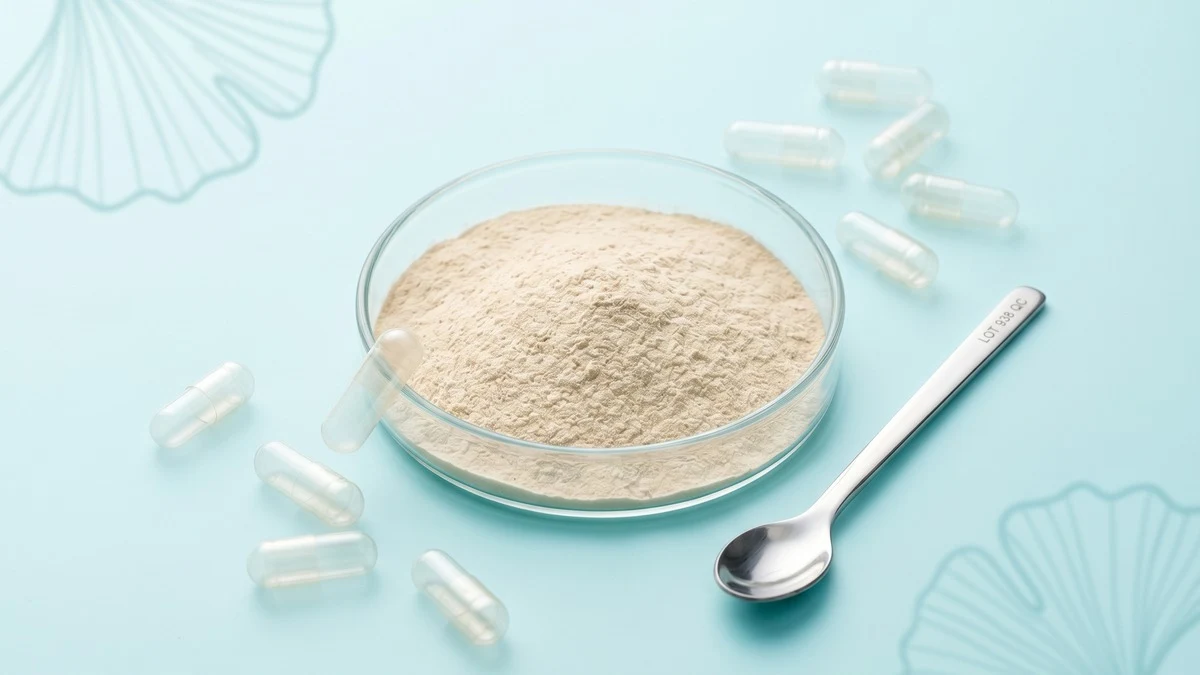
Some capsule projects look fine during the first trial. The fill weight is acceptable, the capsules close properly, and the appearance is clean.
Then the real issues appear after storage or packaging: caking powder, brittle shells, soft or sticky capsules, powder residue inside the pack, or wider fill-weight variation when the same material goes back on the machine.
This is common with herbal powders, botanical extracts, probiotics, mineral salts, enzyme blends and other moisture-sensitive fills. The issue is rarely just “which capsule shell should we use?” It is usually about how moisture moves between the powder, the capsule shell, the headspace inside the pack and the outside environment.
For hygroscopic powders, a practical starting point is simple: first understand where the moisture is moving, then review capsule material, filling conditions, packaging barrier and stability observations together.
Moisture migration usually starts the problem
Once a powder is filled into a hard capsule, the system is no longer static.
The capsule shell has its own moisture level. The powder has its initial moisture and hygroscopic behavior. The package has headspace. The external temperature and relative humidity also matter. These factors can rebalance moisture over time.
| What you observe | Possible moisture clue | What to review next |
|---|---|---|
| Brittle shells or cracked capsules | The powder may be drawing moisture from the shell | Empty capsule condition, powder hygroscopicity, storage humidity, desiccant use |
| Caking powder or powder sticking to surfaces | The powder may have absorbed moisture and lost flow | Open-time exposure, packaging barrier, powder condition in the hopper |
| Soft or sticky capsules | Package humidity may be high, or the fill may release moisture | Packaging material, sealing quality, stability observations |
| Larger fill-weight variation | Powder flow may have changed during holding or running | Start-to-end machine trend, hopper condition, dosing area residue |
| Changes in disintegration or release behavior | Shell and fill condition may have shifted | Finished-product stability, fill properties, packaging environment |
This table is not meant to diagnose every case immediately. Its value is to keep the investigation from becoming too narrow. If capsules crack, the shell is not automatically the only cause. If powder cakes, the powder is not automatically the whole answer.
If the main issue is brittle shells after storage, the related article Why Do Capsule Shells Become Brittle? Moisture, Fill Material, and Packaging All Matter goes deeper into that specific topic.
Which fills tend to amplify moisture issues?
Hygroscopic fills are sensitive to water, room conditions and open-time exposure.
Herbal powders and botanical extracts can vary between batches. Probiotic formulations are often handled with low-moisture and packaging stability in mind. Some mineral salts, sugar salts and highly hygroscopic excipients can change behavior during opening, blending, transfer and filling.
At the early stage, these observations are more useful than asking only whether the project should use gelatin or HPMC:
Does the powder cake during handling?
Does it stick to the scoop, hopper or dosing area?
How long can it remain open before its condition changes?
Does the shell feel different before and after trial filling?
Do caking, sticking, breakage or powder residue appear after packaging?
These details help formulation, production and purchasing teams separate several different causes: moisture uptake by the fill, insufficient package barrier, shell moisture loss or unstable room conditions.
Gelatin capsules: review shell moisture and flexibility
Empty gelatin capsules are widely used because they are mature, familiar to filling operations and suitable for many pharmaceutical, nutraceutical and supplement products.
For hygroscopic fills, the key is to watch shell moisture and flexibility.
If the fill keeps drawing moisture from the capsule shell, the shell may become more brittle over time. Low-humidity storage, aggressive desiccant use or an overly dry package microenvironment can increase this risk. The result may appear as cracked capsules, breakage during polishing, powder leakage or higher damage after transport.
This does not mean gelatin capsules are unsuitable for hygroscopic powders. It means the project should review empty capsule storage, open-time exposure, room humidity, desiccant use and packaging format together.
For many conventional powders, gelatin capsules remain an important choice. For more hygroscopic fills, the question is whether shell moisture can stay within a stable working range throughout handling and storage.
HPMC capsules: useful in low-moisture strategies
Empty HPMC capsules, also known as empty hypromellose capsules, are often considered for vegetarian-positioned products, moisture-sensitive formulations, probiotics, supplements and selected pharmaceutical projects.
In hygroscopic-powder projects, their value is mainly in two areas: the shell itself is typically lower in moisture, and the material can be part of a low-moisture capsule strategy.
That can matter when the fill should not receive too much moisture from the shell, or when the formulation team wants to reduce moisture-related interaction between shell and fill. HPMC capsules can help reduce one part of the moisture risk at the material level.
But HPMC capsules should not be presented as the whole answer.
If the package barrier is weak, outside moisture can still enter the pack. If the powder is exposed too long before filling, it can still absorb moisture. If the fill releases moisture into the shell or headspace, finished-product stability still needs to be observed.
A better approach is to include HPMC capsules as a candidate, then validate the material together with fill behavior, packaging barrier and stability data.
Packaging and desiccants often decide the later stage
For hygroscopic powder capsules, material selection and machine performance matter early. Packaging and storage often decide what happens later.
Bottles, blisters, aluminum pouches, pouch-in-pouch systems, desiccants, sealing quality and headspace can all change the moisture balance. Many projects pass the first trial filling but show differences only after the capsules are placed in their final package.
Desiccants can help, but “drier” is not always “better.” If the outer package has poor barrier performance, the desiccant may be consumed quickly. If the package environment becomes too dry, gelatin shells may face a higher brittleness risk.
For this type of project, observe three stages together:
Before packaging: are the powder and capsule shells stable?
After packaging: do caking, softening, sticking or cracking appear over time?
After opening: does the product remain acceptable during the expected use period?
This is closer to real production than judging the capsule material alone.
Machine problems can point back to moisture
Hygroscopic fills often show machine issues gradually rather than all at once.
For example, fill weight may be stable in the first part of a run and then drift. A hopper may feed smoothly at first and then show sticking or bridging. Empty capsules may look acceptable before filling but break more during polishing, transfer or packaging.
| Machine or storage issue | Possible related factor | What to observe |
|---|---|---|
| Wider fill-weight variation | Caking, bridging or reduced powder flow | Difference between early and later running stages |
| Locking problems | Powder on the body rim, shell too soft or too brittle | Residue position, closed-capsule appearance, station pattern |
| Higher breakage | Shell moisture loss, low-humidity brittleness, machine impact | Empty capsule retain samples, open time, room humidity |
| Sticking after packaging | High package humidity or moisture release from the fill | Package barrier, sealing, time after opening |
| More powder residue | Powder moisture uptake, discontinuous feeding, residue at closing area | Hopper, dosing system, bore area and capsule rim condition |
The location and timing of the issue matter. Separation, filling, closing, polishing, packaging, storage and transport can point to different moisture paths.
For quality-document review and traceability, the article Empty Capsule Quality Control: Film Formation, Moisture and Batch Traceability can be used alongside your sample and batch records.
Size, fill weight and samples should stay in the same discussion
Material and packaging are important, but capsule size should not be left out.
If the selected size is too small, the fill may be packed too tightly and the closing margin becomes limited. If the size is too large, swallowing experience, bottle count and package headspace may change. When a hygroscopic powder loses flow, a size that looked acceptable at first may become less stable in practice.
For early screening, see How Much Can Size 0, 1 and 2 Empty Capsules Hold?. For project discussion, the capsule size support page can help organize target fill weight, bulk density, packaging plan and expected purchase volume before sampling.
How StellarCaps can support hygroscopic-powder projects
For hygroscopic powders, a useful supplier discussion usually starts with fill behavior, target fill weight, capsule size, package format, quality-document requirements and expected purchase volume.
StellarCaps (Jilin) Co., Ltd. is an empty capsule manufacturer located in Huinan Economic Development Zone, Tonghua, Jilin Province, China. The company supplies empty capsules for pharmaceutical, nutraceutical, supplement and OEM/ODM customers. Its product range includes empty gelatin capsules, empty HPMC capsules, empty pullulan capsules and empty hydroxypropyl starch capsules, with common sizes such as 00#, 0#, 1#, 2#, 3# and 4#.
For projects that involve material selection, sample testing, quality documentation or batch traceability, StellarCaps can support discussions around capsule material, size, color, printing, sample evaluation and bulk supply planning. For general mature formulas, gelatin capsules may be a practical route. For moisture-sensitive, vegetarian-positioned or specific review-driven projects, HPMC capsules may be included as a candidate.
For China-regulated drug projects, StellarCaps’ empty HPMC capsules, also described as empty hypromellose capsules, have China CDE registration number F20240000554 and China CDE registration status A after associated review. This is a China CDE registration status, not an overseas certification or global approval. Project suitability still depends on the dosage form, customer review process, quality documentation and stability observations.
For samples, specifications and project discussion, you can contact StellarCaps for capsule samples and quotation support.
FAQ
Do hygroscopic powders always require HPMC capsules?
No. HPMC capsules are a useful candidate for low-moisture strategies, but the final choice depends on powder hygroscopicity, target fill weight, packaging format, storage conditions and stability observations. Some moderately hygroscopic or mature formulas may still use gelatin capsules successfully.
Why do capsule shells become brittle with hygroscopic fills?
One common route is moisture loss from the shell into a hygroscopic fill or into an overly dry package environment. Low room humidity, strong desiccant use, long open-time exposure and transport conditions may also contribute. Retain samples, humidity records and the timing of the issue should be reviewed together.
What information should I prepare before sampling capsules for a hygroscopic powder?
Useful information includes fill type, moisture sensitivity, target fill weight, preferred capsule size, package format, desiccant plan, expected storage condition, quality-document requirements and estimated purchase volume. If trial issues already exist, photos, videos and the stage where the issue appeared are also helpful.
What does China CDE status A mean for StellarCaps HPMC capsules?
For China-regulated pharmaceutical projects, China CDE status A indicates that the excipient has passed associated review with a finished dosage form. StellarCaps’ empty HPMC capsules have China CDE registration number F20240000554 and status A. For any specific project, the customer should still review the formulation requirements, quality documents and internal approval process.
Why should packaging be reviewed together with capsule material?
Capsule material only affects part of the moisture risk. Caking, softening, sticking or brittleness after packaging can also be influenced by barrier performance, sealing, desiccant type and amount, headspace, open-time exposure and storage conditions.