
Some formulas smell before the consumer ever opens the bottle. Botanicals, fermented materials, minerals, sulfur-containing ingredients, and certain animal-origin extracts can all create a difficult first impression. A capsule can help, but it is not a magic filter.
What a capsule shell can do
The shell separates the fill from the mouth, reduces direct taste exposure, and gives the product a cleaner appearance. For powders that are bitter, earthy, or sharp, this is often enough to make daily use more acceptable.
Capsules also help hide color variation and powder texture, which can matter when a formula contains multiple botanical extracts.
What the shell cannot do alone
If the fill releases odor through the bottle, the issue may continue after encapsulation. Odor can be affected by the ingredient source, residual solvents, moisture, oxidation, packaging headspace, and storage temperature.
| Issue | Capsule impact | Other control point |
|---|---|---|
| Bitter or gritty mouthfeel | Often improves | Capsule size and swallowability |
| Strong bottle odor | May only reduce part of it | Bottle, liner, desiccant, and storage |
| Dark or uneven powder color | Can be hidden with opaque shells | Colorant limits and market rules |
| Moisture-driven odor change | Depends on shell and packaging | Moisture barrier and stability checks |
Choosing gelatin, HPMC, or another shell
Empty Gelatin Capsules can be suitable for many conventional fills with manageable moisture behavior. Empty HPMC Capsules are often reviewed when the formula is moisture-sensitive or the brand needs vegetarian positioning.
For premium plant-based concepts, Empty Pullulan Capsules may also be considered. The final choice should come after sample filling, bottle storage, and appearance checks.
Color and opacity are practical tools
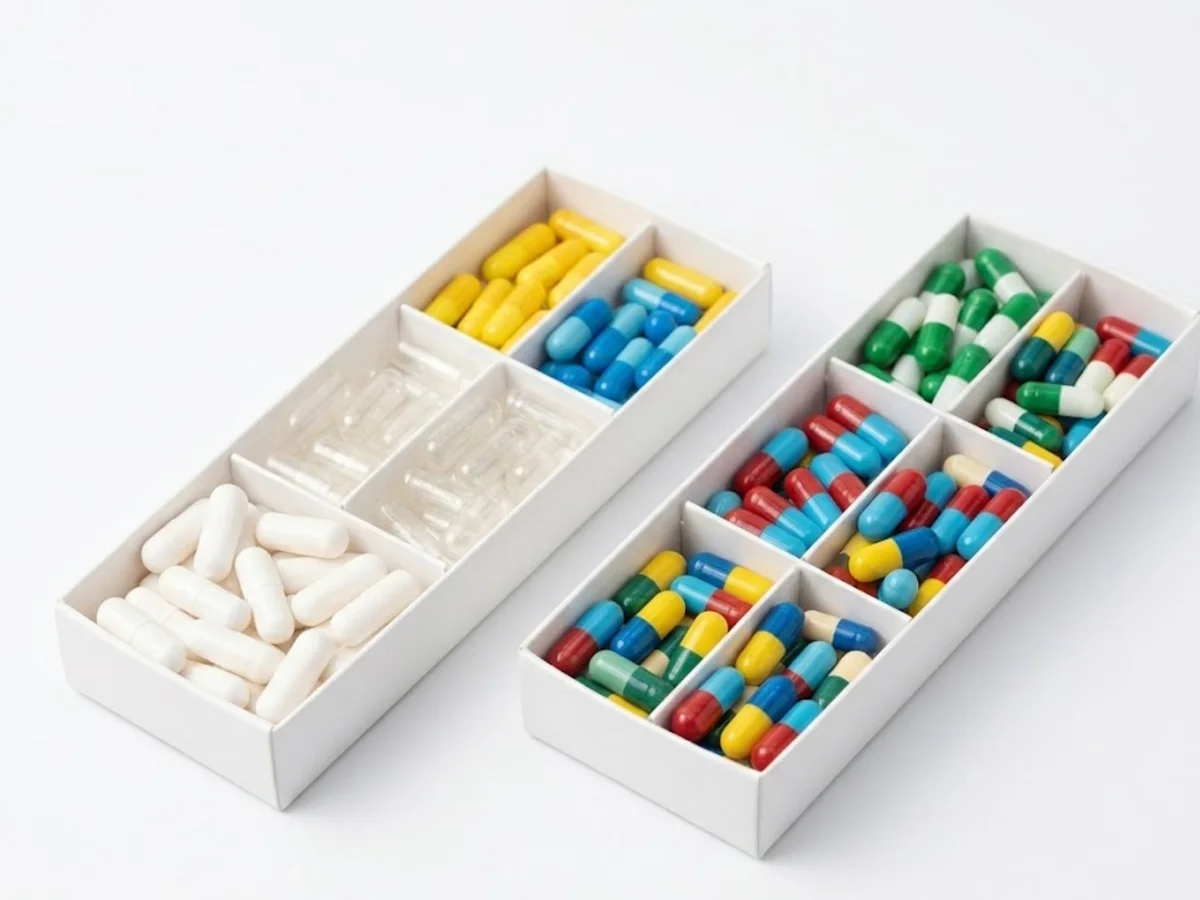
Transparent capsules show the contents clearly, which can be useful for clean-looking formulas. Opaque or colored shells can hide dark powders, uneven blends, or color changes that are normal but visually distracting. Discuss capsule color options before ordering printed labels or bottle photography.
Sampling questions for odor-sensitive products
Ask for samples in the target shell material and color. Fill them with the actual blend if possible. Then check smell after filling, after bottle storage, and after exposure to the expected distribution temperature. A short bench check is not the same as a packaged-product check.
If printing is planned, confirm capsule printing after the shell material and color are settled.
What buyers should not expect from the capsule alone
A capsule manufacturer can help with shell material, color, opacity, and sample testing, but the odor profile is still controlled by the full product system. Ingredient source, particle size, residual moisture, bottle material, seal quality, desiccant choice, and warehouse temperature can all change the result after filling.
For bulk capsules used in herbal, mineral, or fermented formulas, it is better to test a few realistic packaging conditions than to judge only from loose filled capsules on a desk. If the product will be sold online, also check whether the capsule appearance still looks clean in photos after storage.
Packaging should be tested with the capsule
For odor-sensitive formulas, packaging is not a separate decision. A capsule that seems acceptable in a small bag may smell different after two weeks in the final bottle. Test the shell with the planned closure, liner, desiccant, label, and storage condition. This gives the brand a more realistic view before the product reaches reviewers, distributors, or repeat customers.
Frequently Asked Questions
Can capsules fully block a strong smell?
Not always. Capsules can reduce taste and direct odor exposure during swallowing, but bottle odor often depends on packaging and storage as well.
Are opaque capsules better for odor-sensitive formulas?
Opacity helps with appearance more than smell. It can be useful when the formula is dark, speckled, or visually inconsistent.
Should I choose HPMC for all odor-sensitive fills?
No. HPMC may help in low-moisture or vegetarian projects, but gelatin can still be suitable for many formulas. Test the actual fill.
Next step
For an odor-sensitive project, send the ingredient type, fill weight, target shell material, packaging plan, market requirements, and whether you want to Request Samples, then contact StellarCaps to arrange sample evaluation.